

1
/
of
2
Aero Rarities
Bomb - WW1 British 180lb Mk.I H.E.R.L. (Set of 4)
Bomb - WW1 British 180lb Mk.I H.E.R.L. (Set of 4)
Regular price
$9.00 USD
Regular price
Sale price
$9.00 USD
Shipping calculated at checkout.
Quantity
Couldn't load pickup availability
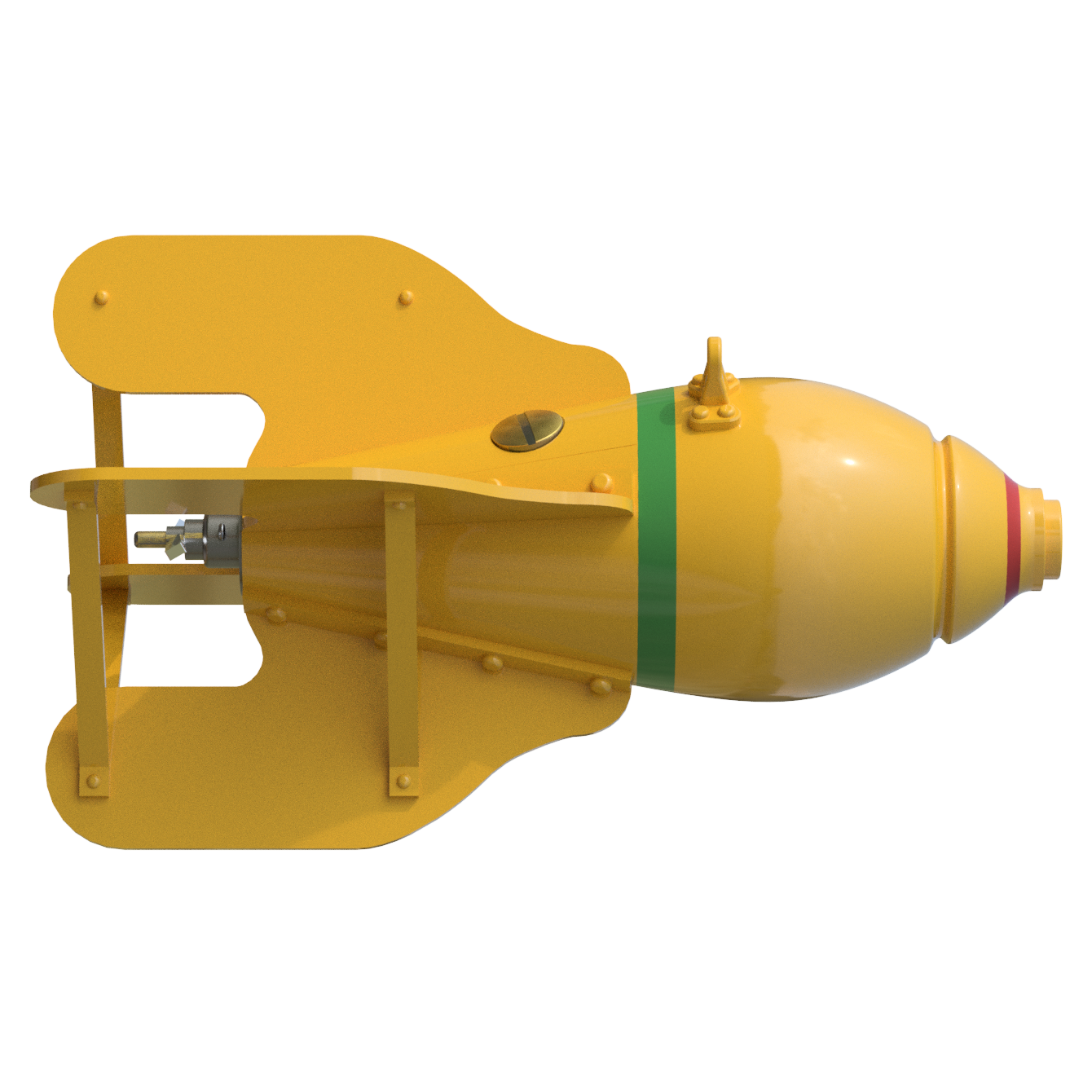
Comprising: Four historically accurate scale models in high-resolution, unpainted, 3D-printed resin. Available in your choice of 1/32, 1/48, or 1/72 scale.
History: The Royal Laboratory's 180lb heavy-case, armor-piercing, high-explosive bomb was introduced in 1915. It emerged during the rapid expansion of Royal Flying Corps and Royal Naval Air Service bombing operations in 1916–1917, when combat experience demonstrated the need for a medium-weight weapon more powerful than early 20lb and 112lb types but lighter and more manageable than the 230lb bombs then entering service.
Developed under War Office direction and produced in standardized patterns, it became a core part of the Royal Air Force’s post-April 1918 ordnance inventory. Typically filled with high explosives such as Amatol or TNT, the weapon was fitted with interchangeable nose or tail pistols to suit specific operational requirements and remained a key asset throughout the war.
Operational Use: Deployed by day and night bombers, it served as an intermediate demolition weapon for attacks on troop concentrations, transport nodes, and industrial targets. Armed via standardized medium-weight bomb racks, aircraft types documented or structurally capable of carrying the 180lb bomb include the Airco D.H.4, D.H.9, and D.H.9A; Bristol F.2B Fighter (in its light bombing role); Handley Page O/100, O/400, and V/1500; Royal Aircraft Factory F.E.2b, F.E.2d, and R.E.8; Short Bros. Admiralty Type 184; and late-production Sopwith 1½ Strutter Home Defence machines.
Note: Images may include digital renderings of the actual 3D designs used to produce this scale model. Each scale is customized to ensure the highest level of detail and historical accuracy, while balancing the limitations of the printing process to produce the most pleasing results.